Human occupation has been traced back to the emergence of anatomically modern humans from Africa some 124,000 BCE through finds at the Faya-2 site in Mleiha, Sharjah. Burial sites dating back to the Neolithic Age and the Bronze Age include the oldest known such inland site at Jebel Buhais. Known as Magan to the Sumerians, the area was home to a prosperous Bronze Age trading culture during the Umm Al Nar period which traded between the Indus Valley, Bahrain and Mesopotamia as well as Iran, Bactria and the Levant.

The ensuing Wadi Suq period and three Iron Ages saw the emergence of nomadism as well as the development of water management and irrigation systems supporting human settlement in both the coast and interior. The Islamic age of the UAE dates back to the expulsion of the Sasanians and the subsequent Battle of Dibba. The UAE' history of trade led to the emergence of Julfar, in the present-day emirate of Ras Al Khaimah, as a regional trading and maritime hub in the area. The maritime dominance of the Persian Gulf by Emirati traders led to conflicts with European powers, including the Portuguese Empire and the British Empire. Social development efforts, most particularly the nurturing of the country's citizens or "human capital," have been a priority of the UAE government since the early years of the federation. Immense resources have been applied to provide modern social and economic development infrastructure in education, health, and social welfare.

Dubai is the most populous and the largest emirate in the UAE with approximately 2,502,715 people. Notably, it is the most progressive emirate among the seven emirates. Despite being a desert, the country has managed to utilize its resources and according to the 2015 statistics, it has an annual GDP of 105.6 billion USD. Unlike its neighboring emirates such as Abu Dhabi, the oil reserves of Dubai have been exhausted; oil contributes only 2 % of the total GDP of this emirate. Although it started as a port, Dubai has developed into a luxurious emirate that is home to the world's tallest building. The city of Dubai is located on the emirate's northern coastline and heads up the Dubai-Sharjah-Ajman metropolitan area.

Today, Dubai has emerged as a cosmopolitan metropolis that has grown steadily to become a global city and a business and cultural hub of the Middle East and the Persian Gulf region. Although Dubai's economy was historically built on the oil industry, the emirate's Western-style model of business drives its economy with the main revenues now coming from tourism, real estate, and financial services. Since 2011, the UAE has aggressively cracked down on opposition activists, particularly if they are suspected of belonging to the Association for Reform and Guidance (Al-Islah), a group formed in 1974 to advocate for democratic reform. The government has accused members of Al-Islah of being foreign agents of the Muslim Brotherhood intent on overthrowing the regime, and designated the Muslim Brotherhood as a terrorist organization in 2014. Qatar's support for the Muslim Brotherhood has been a factor in efforts by the UAE, Saudi Arabia, and their regional allies to isolate that country since 2017. The United Arab Emirates is a country that is made up of seven emirates.

Those are Abu Dhabi, Dubai, Sharjah, Ajman, Fujairah, Ras al-Khaimah, and Umm al-Qaiwain. While the country as a whole has a prime minister and federal president, each emirate has its own ruler that oversees the local governments. The UAE was established in 1971, and since that time, it has seen great population growth. Its largest city is Dubai, which has reached the one million resident milestone with a population of 1.1 million. However, there are other cities within the UAE that have high population counts. The second most populous city, Abu Dhabi, has over 600,000 residents.

There are four additional cities with populations that have surpassed 100,000. Seven cities have populations that are between 10,000 and 100,000, while remaining cities and towns make up the remainder of the population. The UAE has developed from a juxtaposition of Bedouin tribes to one of the world's most wealthy states in only about 50 years. Between 2000 and 2018, average real gross domestic product growth was at close to 4%. It is the second largest economy in the GCC , with a nominal gross domestic product of US$414.2 billion, and a real GDP of 392.8 billion constant 2010 USD in 2018. Since its independence in 1971, the UAE's economy has grown by nearly 231 times to 1.45 trillion AED in 2013.
The non-oil trade has grown to 1.2 trillion AED, a growth by around 28 times from 1981 to 2012. Backed by the world's seventh-largest oil deposits, and thanks to considerate investments combined with decided economic liberalism and firm Government control, the UAE has seen their real GDP more than triple in the last four decades. Nowadays the UAE is one of the world's richest countries, with GDP per capita almost 80% higher than OECD average. Islam is the official religion and Arabic is the official language. The United Arab Emirates' oil and natural gas reserves are the world's sixth and seventh-largest, respectively.
Zayed bin Sultan Al Nahyan, ruler of Abu Dhabi and the country's first president, oversaw the development of the Emirates by investing oil revenues into healthcare, education, and infrastructure. The United Arab Emirates has the most diversified economy among the members of the Gulf Cooperation Council. In the 21st century, the country has become less reliant on oil and gas, and is economically focusing on tourism and business. The government does not levy income tax, although there is a corporate tax in place and a 5% value-added tax was established in 2018. Population estimates of the country in 2000 ranged from 2.6 to nearly 3 million. It serves as the financial, transportation, and communications center of a major petroleum-producing area.

Abu Dhabi also has a large port and is home to federal government ministries and embassies. Dubai is the main trading center of the entire Gulf, has the principal port facilities of the UAE as well as its busiest airport, and has several large commercial enterprises. The UAE leadership has driven forward economic diversification efforts already before the oil price crash in the 1980s, and the UAE is nowadays the most diversified economy in the Middle East and North Africa region.

Although the oil and gas sector does still play an important role in the UAE economy, these efforts have paid off in terms of great resilience during periods of oil price fluctuations and economic turbulence. While the government may still adjust the exact arrangement of the VAT, it is not likely that any new taxes will be introduced in the foreseeable future. Additional taxes would destroy one of the UAE's main enticements for businesses to operate in the country and put a heavy burden on the economy. The UAE emits a lot of carbon dioxide per person compared to other countries. As impressive as economic growth has been in the UAE, the total population has increased from just around 550,000 in 1975 to close to 10 million in 2018.
This growth is mainly due to the influx of foreign workers into the country, making the national population a minority. The UAE features a unique labour market system, in which residence in the UAE is conditional on stringent visa rules. This system is a major advantage in terms of macroeconomic stability, as labour supply adjusts quickly to demand throughout economic business cycles. Efforts have been made to lessen the country's dependence on oil and shift to a more diversified economy, but, according to 2009 figures, more than 85 percent of the UAE's economy depended on exported oil and gas. Oil production was 2.8 million barrels per day in 2009, making the UAE the world's 8th highest-producing country.
Its oil exports were estimated in 2007 at 2.7 million barrels per day , and its oil proven reserves were estimated in 2010 to total 97.8 billion barrels. The UAE is also a major natural-gas producer, with production reaching 50.3 billion cubic meters (2008 est.), making it the 18th largest globally. Exports of natural gas were estimated in 2008 to be 7.6 billion cubic meters , and proven reserves of January 2010 were 6.1 trillion cubic meters . Despite its contributing almost one-third of the UAE GDP, the oil sector employs a small percentage of its workforce. Bordering the Arabian Gulf and the Gulf of Oman, the Untied Arab Emirates has grown to be one of the most important economic centres in the Middle East.

The federation of seven emirates includes the booming international metropolis, Dubai, as well as the capital city and powerhouse, Abu Dhabi. Four Seasons is pleased to operate three modern, ultra-chic hotels and resorts in the UAE, all sure to make your stay in the country unforgettable. Abu Dhabi is the capital and largest of the United Arab Emirates. It is a place of enormous wealth thanks to its oil reserves, but it is also a region with an eye towards sustainable economic and environmental development.

Al Ain (which in Arabic means "The Spring"), also known as the Garden City due to its greenery, is the second largest city in the Abu Dhabi Emirate and the fourth largest city in the United Arab Emirates. It is close to the Omani border, and has a unique desert/mountain landscape that make it a popular tourist attraction for locals and expats alike. A number of well-known commentators have been jailed in recent years for criticizing the authorities, expressing support for dissidents or human rights, or calling for political reform. Leading human rights activist Ahmed Mansoor, who was sentenced to 10 years in prison in 2018 for using social media to "publish false information that damages the country's reputation," was among those who remained behind bars in 2020. This is a major way of distributing oil wealth among the national population.

The immigrant population also benefits to some extent, particularly in regard to medical care. The fact that the traditional tribal system of government each emirate was based on similar political principles facilitated the establishment of the UAE. Hereditary dynastic family rule still operates in each emirate as a local government system under the umbrella of the federal system. Members of the ruling families occupy the most important positions in their political administrations. While the political system continues to retain some of its traditional values at formal and informal levels, it has been able to keep pace with economic and social change. The sheikhs are highly regarded for performing the dual roles of modernizers and guardians of the cultural heritage.

They still have traditional majlis where citizens have access to their leaders. Dubaimay be the second-largest emirate in the country, but it holds the biggest population, majority of which are expats from around the world. Dubai has a thriving business and tourism industry, having a skyline dotted by majestic buildings and towers. Here, you will find the Burj Al Arab (a 7-star hotel), the Burj Khalifa, and the luxurious Palm Trilogy islands, among many other attractions. Zayed ibn Sultan, former governor of the Abu Dhabi-controlled portion of Al-Buraimi oasis. Sheikh Zayed began developing a road network radiating from Abu Dhabi town and had a seawall built along the northern end of the island containing the town.

Under an ambitious five-year development plan, inaugurated in 1968, the town was thoroughly modernized. Electricity, running water, and a central sewerage system were installed, and modern government buildings, hotels, housing projects, and a new port extension were built. An oil refinery on nearby Umm al-Nār Island began production in 1976. Abu Dhabi's international airport is at the south end of the island. Motor roads link the cities of Abu Dhabi with Dubai , Al-Ain oasis , and Qatar .

With a total population of 68,000 people, Umm al-Quwain is the least populous state in the UAE. Unlike the other emirates, Quwain has not made any findings of oil products or gas. Therefore, its economy majorly relies on revenue collected from hotels, tourism, and parks. Ras al-Khaimah is situated to the northern part of the UAE, bordering part of Oman's territory, the Musandam. The population of this emirate is 205,000 people, and the Emirati citizens are the largest group. Ras al-Khaimah does not have any oil, and it has, therefore, focused on advancing its industrial sector.
The primary economic areas of Khaimah include real estate, tourism, building materials, service sector, and agriculture. The most recognized types of attraction in this emirate include shopping, nature, parks, water, and amusement parks. The capital city of this emirate is also referred to as Ras al-Khaimah and it is a home to most of the citizens of Ras al-Khaimah emirate. Despite being the smallest emirate, Ajman is the fourth most populous state in the UAE with about 258,000 people.
The major tourist attractions in this area include cultural destinations, hotels, and shopping malls. The city hosts the Ruler's office, several banks, and approximately fifty local and international retail shops. Ajman was founded in 1803 after Sheik Rashid bin Humaid Al Nuami conquered the coastal settlements.

Apart from being the capital city, it is also the second largest emirate in the world with an approximate population of 1.6 million people. Abu Dhabi is classified as one of the wealthiest cities in the world with most of its revenue originating from petroleum products. This emirate accounts for approximately two-thirds of the UAE economy. Unlike Dubai which is more Westernized, Abu Dhabi is more into cultural traditions. Abu Dhabi is also a major tourist attraction state where most people visit for cultural reasons such as to visit the Sheikh Zayed Mosque, have fun on the sandy beaches, visit the Yas Island and the famous Ferrari World Abu Dhabi.

Here, you will find the Burj Al Arab (a 7-star hotel), the Burj Khalifa , and the luxurious Palm Trilogy islands, among many other attractions. Reuters, the news and media division of Thomson Reuters, is the world's largest multimedia news provider, reaching billions of people worldwide every day. Reuters provides business, financial, national and international news to professionals via desktop terminals, the world's media organizations, industry events and directly to consumers.

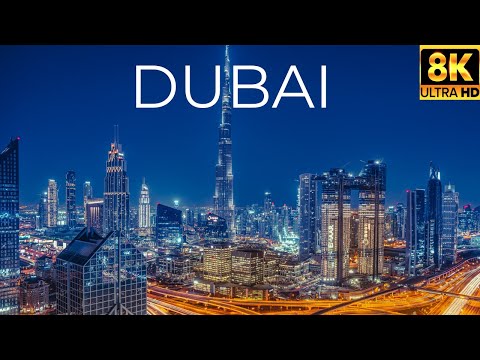
Dubai is a city in the United Arab Emirates, located within the emirate. The emirate of Dubai is located on the southeast coast of the Persian Gulf and is one of the seven emirates that make up the country. It has the largest population in the UAE and the second-largest land territory by area after Abu Dhabi, the national capital.

Reflecting a mix of modern and traditional life, clothing styles include Western and indigenous dress and the national dress of several other countries. A great variety of dress is manifest in public places, including that of groups from South and Southeast Asia. Most Emirati men wear the dishdasha, a white, loose-fitting garment that is comfortable in hot weather. Most women wear the black abayah and some also wear a facemask called the burka, although this tradition is less common among younger women. Few countries in history have experienced, in less than four decades, a huge shift in income and development comparable to that of the United Arab Emirates during the last part of the twentieth century. The UAE developed a public national educational system in a thirty year period that is similar to what Western countries established in over a hundred year period.

Since the early 1960s the UAE has emerged from relative obscurity in global affairs to become one of the wealthiest and most dynamic of the smaller countries of the world. The rapid infrastructure development in virtually every corner of the country provides visual evidence of immense change. Public and private construction and modern consumption patterns are in evidence throughout the country.

The discovery of oil in 1966 transformed the emirate and its way of life. Dubai's first oil exports in 1969 were followed by a period of rapid development that laid the foundations for today's modern society. In the 1980s and early 1990s, Dubai took a strategic decision to emerge as a major international-quality tourism destination. Investments in tourism infrastructure have paid off handsomely over the years. The idea behind the construction of Burj Khalifa and the surrounding complex was to attract international tourism and diversify the country's economy, mainly based on Oil & Gas production and export. Before 1960, the only settlements were small towns and villages.

Towns have been transformed from mud-walled communities into commercial capitals integrated in the global economy. Because of the small population and harsh desert interior, 80 percent of the population lives in the coastal capital cities, leading social scientists to describe them as city-states. The states gained autonomy following World War II (1939–45), when the trucial states of Bahrain and Qatar declared independent statehood. The rest were formally united in 1971, with the city of Abu Dhabi serving as the capital. This emirate is the second smallest and also the least populated of the seven emirates. One of the most important industries here is the fishing industry, with Umm Al Quwain exporting seafood to both Europe and the Middle East.

It has much to offer for people who decide to visit or move here, including many islands and Dreamland, the largest water park in the country. The education system through secondary level is monitored by the Ministry of Education in all emirates except Abu Dhabi, where it falls under the authority of the Abu Dhabi Education Council. It consists of primary schools, middle schools and high schools. The public schools are government-funded and the curriculum is created to match the United Arab Emirates' development goals. The medium of instruction in the public school is Arabic with emphasis on English as a second language. There are also many private schools which are internationally accredited.

Public schools in the country are free for citizens of the UAE, while the fees for private schools vary. The UAE's monetary policy stresses stability and predictability, as the Central Bank of the UAE keeps a peg to the US Dollar and moves interest rates close to the Federal Funds Rate. This policy makes sense in the current situation of global and regional economic and geopolitical uncertainty.

In the mid- to long term, however, the peg will become less important, as the UAE transitions to a knowledge-based economy – and becomes yet more independent from the oil and gas sector . The country has developed a range of related industrial operations related to the oil industry, including refineries (such as ADNOC's Ruwais and Umm al-Nar refineries in Abu Dhabi), petrochemical plants, and energy operations. These include several large oil- and gas-based water and power projects, especially the desalination plants in Abu Dhabi and Dubai.


No comments:
Post a Comment
Note: Only a member of this blog may post a comment.